Ce document est disponible uniquement sur bibliothequer
 bibliothequer
 0
0Exploration Of Romantic Themes In Sonnets D’Amour Et Autres Poèmes
In the realm of French literature, “Sonnets d’Amour et Autres Poèmes” stands as a testament to the enduring power of romantic expression. This collection, rich in emotional depth and linguistic elegance, offers a profound exploration of love’s multifaceted nature. As we delve into the romantic themes woven throughout these sonnets and poems, it becomes evident that the poet’s mastery lies not only in the articulation of love’s joys but also in the nuanced portrayal of its sorrows and complexities.
To begin with, the sonnets in this collection often celebrate the idealized aspects of love, capturing moments of pure bliss and enchantment. The poet employs vivid imagery and melodious language to evoke the beauty and intensity of romantic passion. Through metaphors drawn from nature, such as blooming flowers and radiant sunsets, the poet paints a picture of love as a sublime and transcendent force. This idealization serves to elevate the beloved to an almost divine status, reflecting the poet’s adoration and reverence.
However, the collection does not shy away from exploring the more tumultuous aspects of love. In contrast to the idyllic portrayals, several poems delve into themes of longing, heartache, and unrequited affection. The poet skillfully captures the anguish of separation and the yearning for a distant or unattainable beloved. Through poignant language and evocative imagery, these poems convey the emotional turmoil that often accompanies love, highlighting its capacity to both uplift and devastate.
Moreover, the exploration of romantic themes in “Sonnets d’Amour et Autres Poèmes” extends beyond the personal to encompass broader philosophical reflections on the nature of love itself. The poet frequently contemplates the transient and ephemeral qualities of love, pondering its fleeting nature and the inevitability of change. This introspective approach invites readers to consider the impermanence of human emotions and the delicate balance between joy and sorrow in romantic relationships.
In addition to these thematic explorations, the poet’s use of form and structure further enhances the emotional impact of the collection. The sonnet, with its strict rhyme scheme and meter, serves as a fitting vehicle for the expression of intense emotions. The disciplined structure of the sonnet contrasts with the often chaotic and unpredictable nature of love, creating a tension that mirrors the complexities of romantic experience. This formal precision allows the poet to convey deep emotional truths with clarity and elegance.
Furthermore, the interplay between sound and meaning in these poems adds another layer of richness to the exploration of romantic themes. The poet’s careful attention to rhythm, alliteration, and assonance creates a musical quality that enhances the emotional resonance of the words. This auditory dimension invites readers to engage with the poems on a sensory level, deepening their appreciation of the themes being explored.
In conclusion, “Sonnets d’Amour et Autres Poèmes” offers a comprehensive and nuanced exploration of romantic themes, capturing the full spectrum of love’s joys and sorrows. Through vivid imagery, philosophical reflection, and masterful use of form, the poet invites readers to embark on a journey through the complexities of the human heart. This collection not only celebrates the beauty of love but also acknowledges its challenges, ultimately offering a timeless meditation on the nature of human connection.
Literary Devices And Their Impact In Sonnets D’Amour Et Autres Poèmes
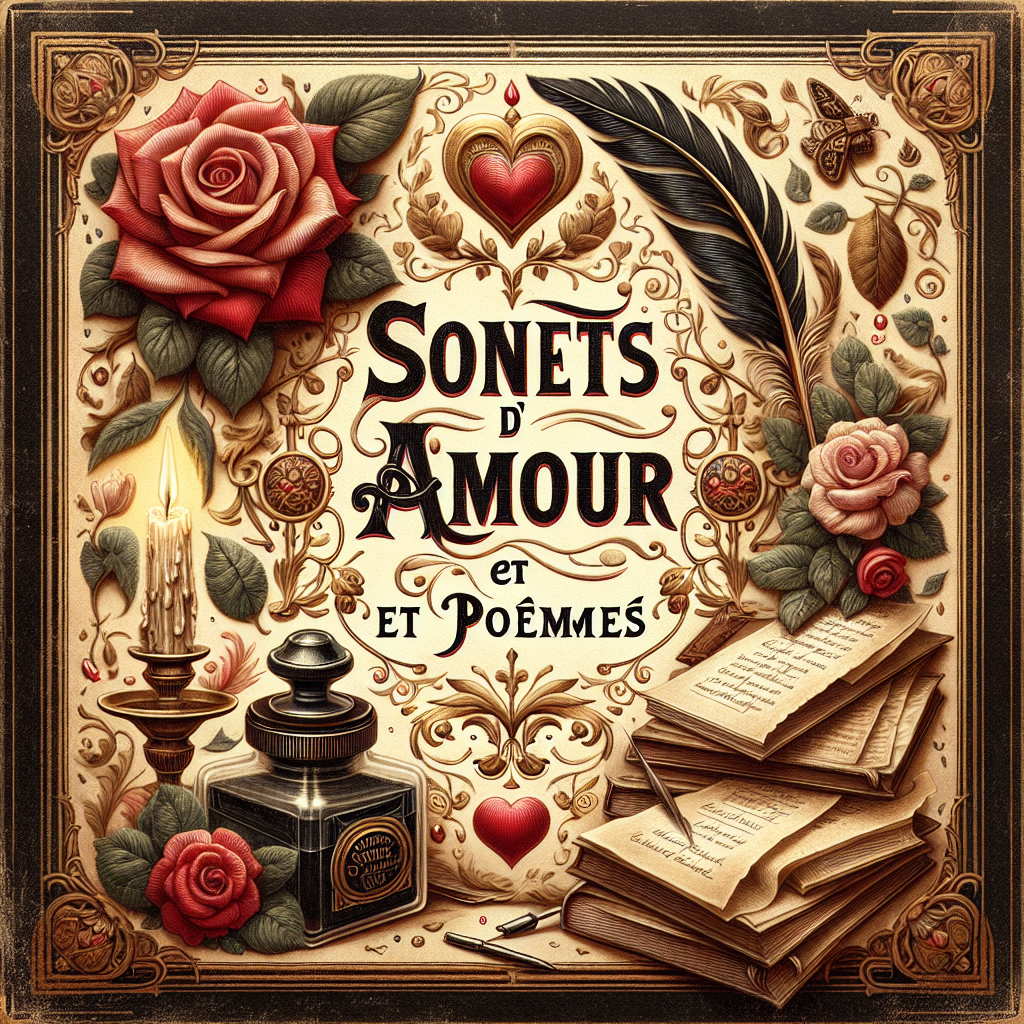
In the realm of poetry, the collection “Sonnets d’Amour et Autres Poèmes” stands as a testament to the enduring power of language and emotion. This anthology, rich in its exploration of love and other profound themes, employs a variety of literary devices that enhance its emotional depth and artistic expression. Understanding these devices and their impact is crucial for appreciating the nuanced beauty of the poems within this collection.
To begin with, the use of metaphor is prevalent throughout “Sonnets d’Amour et Autres Poèmes,” serving as a bridge between the tangible and the abstract. Metaphors allow the poet to convey complex emotions and ideas in a manner that resonates deeply with the reader. For instance, love might be depicted as a tempestuous sea, suggesting both its beauty and its potential for chaos. This device not only enriches the imagery but also invites readers to engage with the text on a more personal level, as they interpret these metaphors through the lens of their own experiences.
In addition to metaphor, the collection frequently employs simile to draw comparisons that illuminate the poet’s intent. By likening one thing to another using “like” or “as,” similes create vivid images that enhance the reader’s understanding and emotional response. For example, a lover’s eyes might be compared to stars, evoking a sense of wonder and admiration. Such comparisons are not merely decorative; they serve to deepen the emotional impact of the poems, allowing readers to visualize and feel the sentiments being expressed.
Another significant device found in “Sonnets d’Amour et Autres Poèmes” is alliteration, which contributes to the musicality and rhythm of the verses. The repetition of consonant sounds at the beginning of words can create a pleasing auditory effect, drawing the reader into the poem’s lyrical flow. This technique often underscores the emotional tone of a poem, whether it be the soft, soothing sounds of a tender love sonnet or the harsh, jarring consonants of a poem exploring heartbreak.
Furthermore, the use of enjambment in this collection plays a crucial role in maintaining the momentum and fluidity of the poems. By allowing a sentence or thought to continue beyond the end of a line, enjambment creates a sense of continuity and urgency. This device encourages readers to move swiftly from one line to the next, mirroring the often relentless progression of emotions and thoughts experienced in love and life.
Imagery, too, is a cornerstone of “Sonnets d’Amour et Autres Poèmes,” painting vivid pictures that engage the senses and evoke strong emotional responses. Through descriptive language, the poet crafts scenes that transport readers to different times and places, allowing them to experience the world through the poet’s eyes. Whether depicting a serene garden or a stormy night, imagery serves to ground the abstract emotions of the poems in concrete, relatable experiences.
Finally, the strategic use of symbolism throughout the collection adds layers of meaning to the poems. Symbols, whether they be objects, colors, or actions, carry significance beyond their literal interpretation. A rose, for instance, might symbolize love, beauty, or even transience, depending on its context within the poem. By weaving symbols into their work, poets invite readers to delve deeper into the text, uncovering hidden meanings and connections.
In conclusion, the literary devices employed in “Sonnets d’Amour et Autres Poèmes” are integral to the collection’s impact and resonance. Through metaphor, simile, alliteration, enjambment, imagery, and symbolism, the poems transcend mere words on a page, becoming powerful expressions of human emotion and experience. These devices not only enhance the aesthetic quality of the poems but also invite readers to engage with them on a profound and personal level, ensuring their enduring appeal and significance.
Historical Context And Influence On Sonnets D’Amour Et Autres Poèmes
The collection “Sonnets d’amour et autres poèmes” emerges as a significant work within the broader tapestry of French literature, reflecting both the historical context of its creation and the enduring influence of poetic traditions. To fully appreciate the nuances of this collection, it is essential to delve into the historical backdrop against which these poems were crafted, as well as the literary influences that shaped their form and content.
During the period in which “Sonnets d’amour et autres poèmes” was composed, France was undergoing profound social and cultural transformations. The late 19th and early 20th centuries were marked by rapid industrialization, political upheaval, and a burgeoning interest in exploring the complexities of human emotion and identity. This era, often characterized by a tension between tradition and modernity, provided fertile ground for poets seeking to express the intricacies of love and the human experience. Consequently, the sonnet form, with its rich history and structural discipline, offered a compelling vehicle for such exploration.
The sonnet, a poetic form with roots in the Italian Renaissance, was popularized in France by poets such as Joachim du Bellay and Pierre de Ronsard during the 16th century. These poets, part of the literary group known as La Pléiade, sought to elevate the French language to the level of classical Latin and Greek through the adoption and adaptation of established poetic forms. The sonnet, with its 14 lines and intricate rhyme schemes, became a favored form for expressing themes of love, beauty, and the passage of time. This historical lineage undoubtedly influenced the poets of “Sonnets d’amour et autres poèmes,” who drew upon the sonnet’s established conventions while infusing them with contemporary sensibilities.
Moreover, the influence of Romanticism and Symbolism is palpable in “Sonnets d’amour et autres poèmes.” Romanticism, with its emphasis on emotion, individualism, and the sublime, encouraged poets to explore the depths of human passion and the natural world. This movement, which had dominated the early 19th century, left an indelible mark on subsequent generations of poets. Similarly, Symbolism, which emerged in the latter half of the century, sought to transcend the literal and evoke the ineffable through metaphor and suggestion. The interplay of these movements is evident in the collection’s exploration of love as both an earthly and transcendent force, capable of evoking profound joy and deep melancholy.
In addition to these literary influences, the historical context of the Belle Époque, a period of relative peace and prosperity in France, also played a role in shaping the themes and tone of “Sonnets d’amour et autres poèmes.” This era, characterized by optimism and a flourishing of the arts, provided a backdrop against which poets could explore themes of love and beauty with a sense of hope and possibility. However, the looming specter of World War I, which would soon shatter this idyllic period, adds a layer of poignancy to the collection, as the poems can be seen as both a celebration of love and a lament for its fragility in the face of impending turmoil.
In conclusion, “Sonnets d’amour et autres poèmes” is a testament to the enduring power of the sonnet form and its ability to convey the complexities of love across time. By examining the historical context and literary influences that shaped this collection, one gains a deeper understanding of its significance within the canon of French poetry. Through the interplay of tradition and innovation, these poems continue to resonate with readers, offering insights into the timeless nature of love and the human condition.